


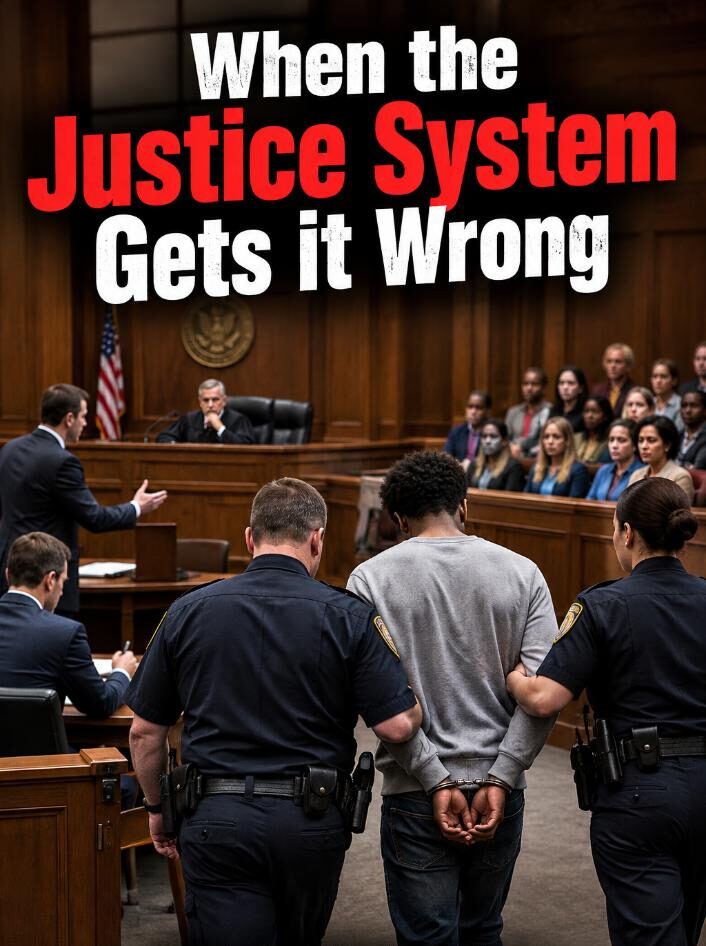
Imagine being accused of a crime you did not commit. Imagine losing your freedom, being separated from your family, and being hated for a crime that you didn’t commit. Some of us have had this experience. One issue is the number of black people who have been wrongly accused or convicted of crimes that they had nothing to do with. In my opinion, everyone deserves to be treated fairly and given a fair opportunity to prove their innocence, regardless of their race. This is important because being accused of something you did not do can affect a person’s life, having them to miss important moments, and dealing with emotional and financial struggles.
Even after someone is proven innocent, the experience does not simply disappear. Their reputation and relationships can still be affected by something they never did. This issue deserves attention because everyone should be treated equally by the justice system. When someone is accused of a crime, the focus should be on finding the truth and making sure the right person is held responsible. So how do you get the wrong person? Race should never determine how serious someone’s case is taken or how they are treated, but apparently most times it does. After discovering that the wrong person is in custody catching the real criminal is not even guaranteed, so this person served a sentence for someone else for years and they still haven’t found the real criminal is a waste of life.
These people could have experienced more freedom of life, instead of being locked up missing out on moments with their family and friends. I also think it is important to understand that wrongful convictions can happen for different reasons. Mistaken identification, false confessions, unreliable evidence, misconduct, and inadequate legal representation can all contribute to someone being convicted when they are actually innocent. This is why cases should be investigated carefully instead of automatically assuming that the person who has been accused is guilty. When mistakes are made, they can have serious consequences for both the innocent person and the victim because the actual person responsible may still be free.
Another part of this issue that is concerning is how quickly people can judge someone after hearing that they have been accused of a crime without knowing the backstory. We often see a headline or social media post and immediately form an opinion without knowing the entire story. Being accused of a crime does not automatically mean that someone is guilty, because apparently the justice system tends to get a lot of things wrong. There is a difference between being accused, being charged, being convicted, and being proven guilty through the legal process. People should be careful about judging someone before all of the facts are known.
I also believe wrongful convictions affect more than just the individual who is accused. Families can suffer when a loved one is sent to prison for something they did not do. Parents can lose time with their children, children can grow up without one of their parents, and families can
experience financial and emotional stress. Communities can also lose trust in the justice system when people believe that innocent individuals are not being protected. When trust is lost, it can become harder for people to believe that the system will treat everyone fairly.
At the same time, I understand that the justice system has a difficult responsibility. When a serious crime happens, victims and their families deserve justice, and the person responsible should be held accountable. However, getting justice should not mean rushing to punish someone just because they are suspected of a crime. Justice should mean finding the truth and making sure the evidence supports the decision being made.
In my opinion, one way to help prevent wrongful convictions is to make sure investigations are thorough and that evidence is carefully examined. Law enforcement, prosecutors, defense attorneys, and courts all have important responsibilities when someone’s freedom is at stake. Cases should not be based only on assumptions or pressure to get a conviction. There should be a strong focus on reliable evidence and giving the accused person a fair opportunity to defend themselves.
People should continue talking about cases involving wrongful convictions because these stories can teach important lessons. When someone is eventually proven innocent, we should not only celebrate their freedom, but we should also ask what went wrong and what could have been done differently. Learning from mistakes can help prevent similar situations from happening to someone else in the future.
Ultimately, justice should be about finding the truth, not simply finding someone to blame. Innocent people deserve the chance to live their lives without being punished for something they did not do. Being black should never make someone less deserving of fairness, respect, or the presumption of innocence. A person’s race should not determine whether they are believed, how they are treated, or how their case is handled.
Wrongful convictions remind us that the justice system is made up of people, and people can make mistakes. That is why fairness, careful investigation, reliable evidence, and accountability are so important. If we truly want justice, we have to care about both holding the guilty accountable and protecting the innocent.
At the end of the day, justice is not about finding someone to blame, it is about finding the truth.